3GPP Release 17
IP30
Dual GbE
Sub-1W Idle
Edge Compute
Wi-Fi 6 Optional
ⓘ
3GPP Release 17 RedCap – not Release 18 eRedCap. The EX400 implements 5G RedCap as defined in Release 17, delivering up to 226 Mbps theoretical peak downlink on 5G SA networks. Release 18 eRedCap hardware – the LTE Cat-1 replacement standard targeting ~10 Mbps – arrives from 2026. The EX400 runs on the same 5G SA infrastructure that will carry eRedCap devices and is a sound deployment choice today. See What is eRedCap? for the full Release 18 guide.
The Problem It Solves
Commercial IoT has been caught between two bad options. Full 5G routers deliver far more throughput than a vending machine, retail POS, or agricultural sensor will ever need – and they idle at 5-15W, making battery and solar deployment impractical. 4G LTE alternatives are proven and cost-effective, but they are running out of road as operators refarm spectrum through the 2030s.
5G RedCap is built specifically for this gap. It delivers 5G network access and longevity at a fraction of the complexity and power of full 5G – right-sized for the hundreds of millions of connected commercial devices that need moderate throughput, long operational life, and a future-proof cellular standard.
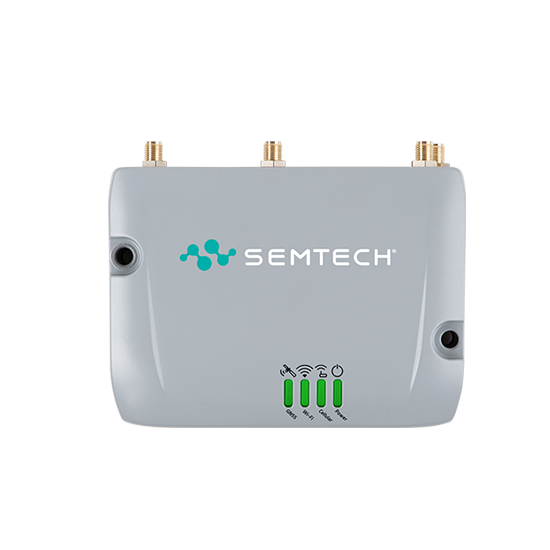
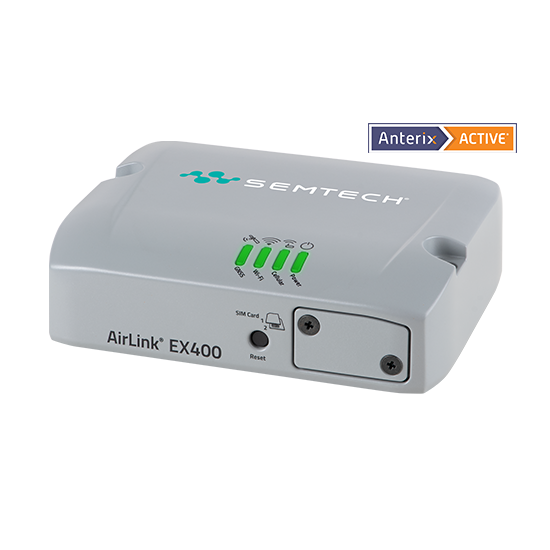
The EX400 implements that standard in a commercial-grade form factor: semi-rugged metal housing, dual Gigabit Ethernet for clean network segmentation, sub-1W idle power consumption, and Semtech’s AirLink OS with three decades of field-proven reliability behind it.
Key Specifications at a Glance
Idle power (840mW @ 12V)
Peak downlink (theoretical)
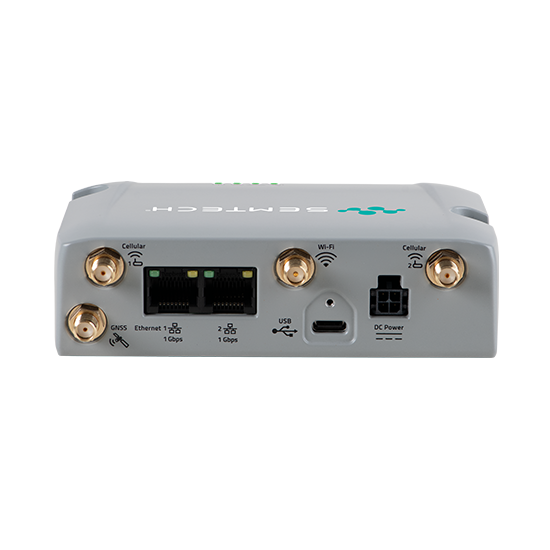
Dual Gigabit Ethernet
Dual Nano SIM slots
DC input range
MTBF (Telcordia SR-332)
Full Technical Specifications
| Parameter | EX400 Specification |
|---|---|
| Cellular standard | 5G RedCap (3GPP Release 17) + LTE Cat-4 |
| Peak downlink | 226 Mbps (theoretical maximum) |
| Peak uplink | 120 Mbps (theoretical maximum) |
| MIMO | 2×2 |
| SIM | Dual SIM, Nano-4FF |
| RF connectors | SMA |
| 5G NR bands | n1, n2, n3, n5, n7, n8, n12, n13, n14, n18, n20, n25, n26, n28, n38, n40, n41, n48, n66, n70, n71, n77, n78, n79 |
| 4G LTE bands | B1-B5, B7, B8, B12-B14, B17-B20, B25, B26, B28, B34, B38-B43, B48, B66, B70, B71, B106 |
| Wi-Fi | Optional – Wi-Fi 6, 1×1 MIMO, 2.4/5 GHz, 600 Mbps peak, WPA2/3, 16 clients per radio |
| Ethernet | Dual Gigabit Ethernet (1 Gbps each) |
| Serial ports | None |
| GNSS | Dual-band |
| USB | USB Type-C (data only) |
| GPIO | 1x |
| Power input | 9-30 VDC |
| Idle power | 840 mW / 70 mA @ 12VDC (single Ethernet enabled) |
| Standby power | 24 mW / 2 mA @ 12VDC (triggered by timer, I/O or low voltage) |
| IP rating | IP30 (metal housing) |
| Operating temperature | -25°C to +70°C |
| Storage temperature | -40°C to +85°C |
| Humidity | 95% RH at 60°C |
| Regulatory | FCC, IC/ISED, PTCRB, GCF certified; CE, RED, RCM planned |
| Carrier certified | AT&T, Verizon; T-Mobile, Telus, Rogers, Bell, Telstra planned |
| FirstNet | Capable |
| Anterix Band 106 | Supported (900 MHz private LTE/5G) |
| Operating system | AirLink OS |
| Cloud management | AirLink Management Service (ALMS) – included with AirLink Complete |
| On-premise management | AirLink Manager (AM) / Mobility Manager (AMM) – paid option |
| Edge compute CPU | Dual Core ARM Cortex A55 (ARMv8.2-A 64-bit) |
| Edge compute RAM | 600 MB (available to containers) |
| Edge compute storage | 500 MB flash |
| Container support | Docker (via ALMS) |
| VPN | IPsec IKEv1/IKEv2, AES-256, SHA-512, FIPS 140-2 Level 1, up to 10 tunnels |
| Firewall | Stateful, port forwarding, DMZ |
| Routing | IPv4/IPv6, NAT, DHCP, policy-based routing, QoS, WAN failover |
| MTBF (no Wi-Fi) | 95.91 years – Telcordia SR-332, Method I, Issue 3, 25°C |
| MTBF (with Wi-Fi) | 92.35 years |
| Dimensions | 117.3 x 33 x 85 mm (94 mm depth including SMA connectors) |
| Weight | 320 g |
| SKU – standard | 1105302 |
| SKU – with Wi-Fi | 1105303 |
| In the box | Router, DC power cable, Quick Start Guide, 1 year AirLink Complete |
| Optional accessories | AC adapter (12VDC), DIN rail bracket, DC power cable |
GSMA IoT Use Cases
The EX400 maps directly to the GSMA’s Mobile IoT use case taxonomy for mid-tier connected devices – those requiring more throughput than NB-IoT or LTE-M but not the full complexity of mainstream 5G.
- Smart retail and digital signage – Multi-site POS terminals, digital display networks and in-store IoT across distributed retail estates. Dual Ethernet keeps POS traffic on one port and management on the other. ALMS handles fleet-wide firmware updates without site visits.
- EV charging infrastructure – Connectivity for charge point controllers with minimal idle draw between sessions. 5G RedCap provides the network longevity that EV charging infrastructure – designed to operate for 10-15 years – demands.
- Smart manufacturing and IIoT – Machine monitoring, production line sensors, conveyor controls. Edge compute on the EX400 runs protocol translation locally, reducing latency and upstream bandwidth requirements.
- Smart agriculture – Irrigation controllers, environmental sensors, livestock monitoring across large sites. Sub-1W idle enables solar and battery-powered field installations that 4G routers make impractical.
- Commercial building management – BMS integration, HVAC monitoring, energy management, access control. Dual Ethernet physically separates the BMS network from corporate infrastructure without additional switching hardware.
- Vending, kiosks and unattended retail – Unmanned assets requiring low-maintenance reliable connectivity. Standby mode (24mW) and remote management reduce both energy cost and operational overhead.
EX400 vs RX400 – Which Model is Right
Choose the EX400 for:
- Indoor or semi-sheltered commercial environments
- Dual Ethernet network segmentation
- Retail, manufacturing, building, agriculture
- Standard 9-30V DC supply
- Weight-sensitive or compact installations
Choose the RX400 instead for:
- Outdoor or exposed environments (IP64)
- Extreme temperatures down to -40°C
- RS-232 serial for SCADA / RTU equipment
- Solar or low-voltage battery (7V minimum)
- Hazardous areas – Class 1 Div 2, ATEX (planned)
AirLink Complete – Included With Every EX400
Every EX400 ships with one year of AirLink Complete, covering:
- 24/7 direct technical support
- AirLink Management Service (ALMS) – cloud platform for remote configuration, monitoring, diagnostics and firmware deployment at scale
- Extended hardware warranty up to 5 years with active subscription
- Critical firmware updates guaranteed through at least 31 December 2030
For environments where cloud management is not permitted, AirLink Manager (AM) and AirLink Mobility Manager (AMM) provide on-premise alternatives at a paid licence cost.
Available through authorised Semtech AirLink channel partnersThe EX400 is available to order now. Contact a qualified reseller for pricing, regional stock availability and carrier certification status in your market.
Source: Semtech AirLink EX400 – sierrawireless.com |
Semtech press release, January 2026